
Home/Technologies/3D printing with plastics
Technology
3D printing with plastics
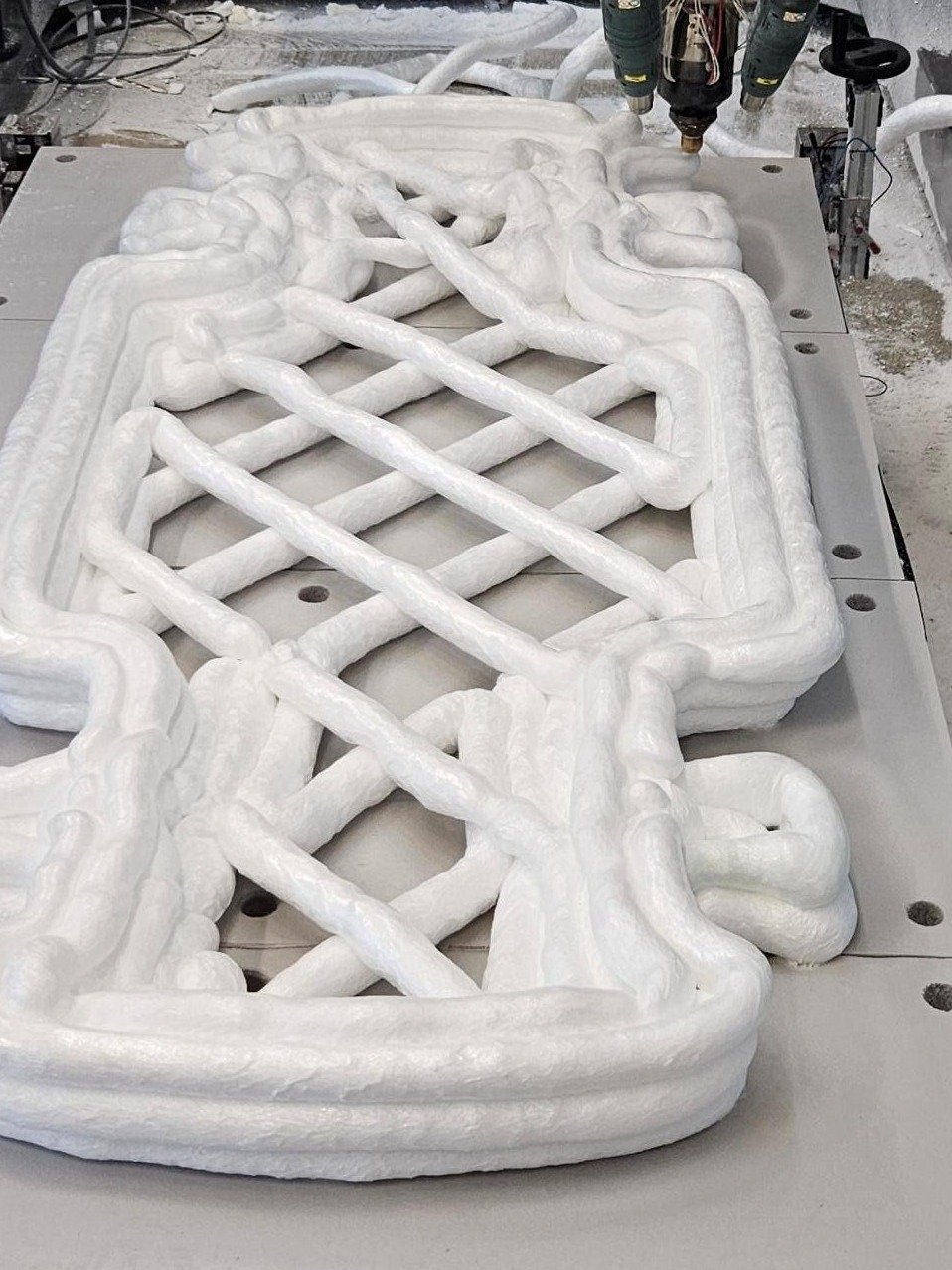
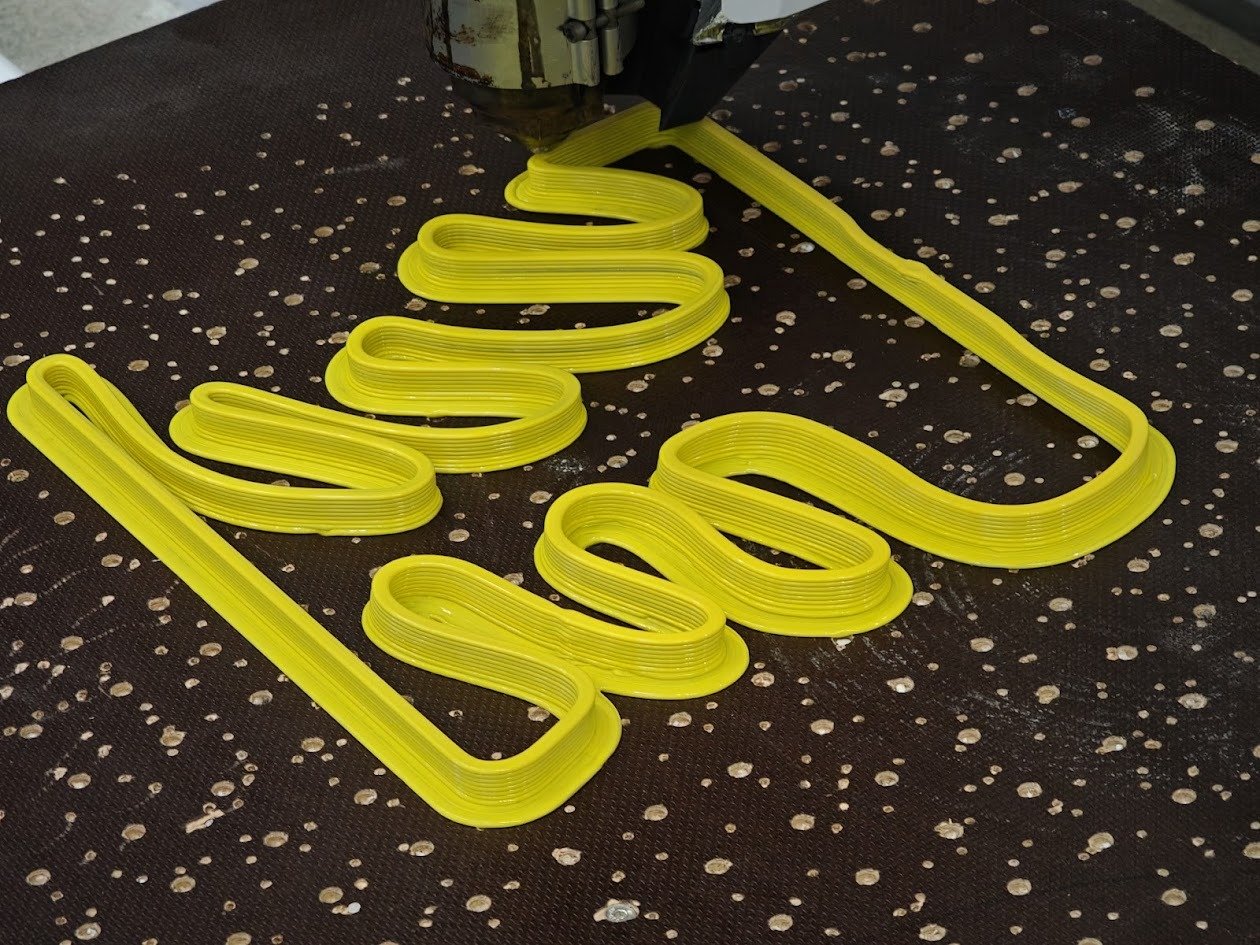
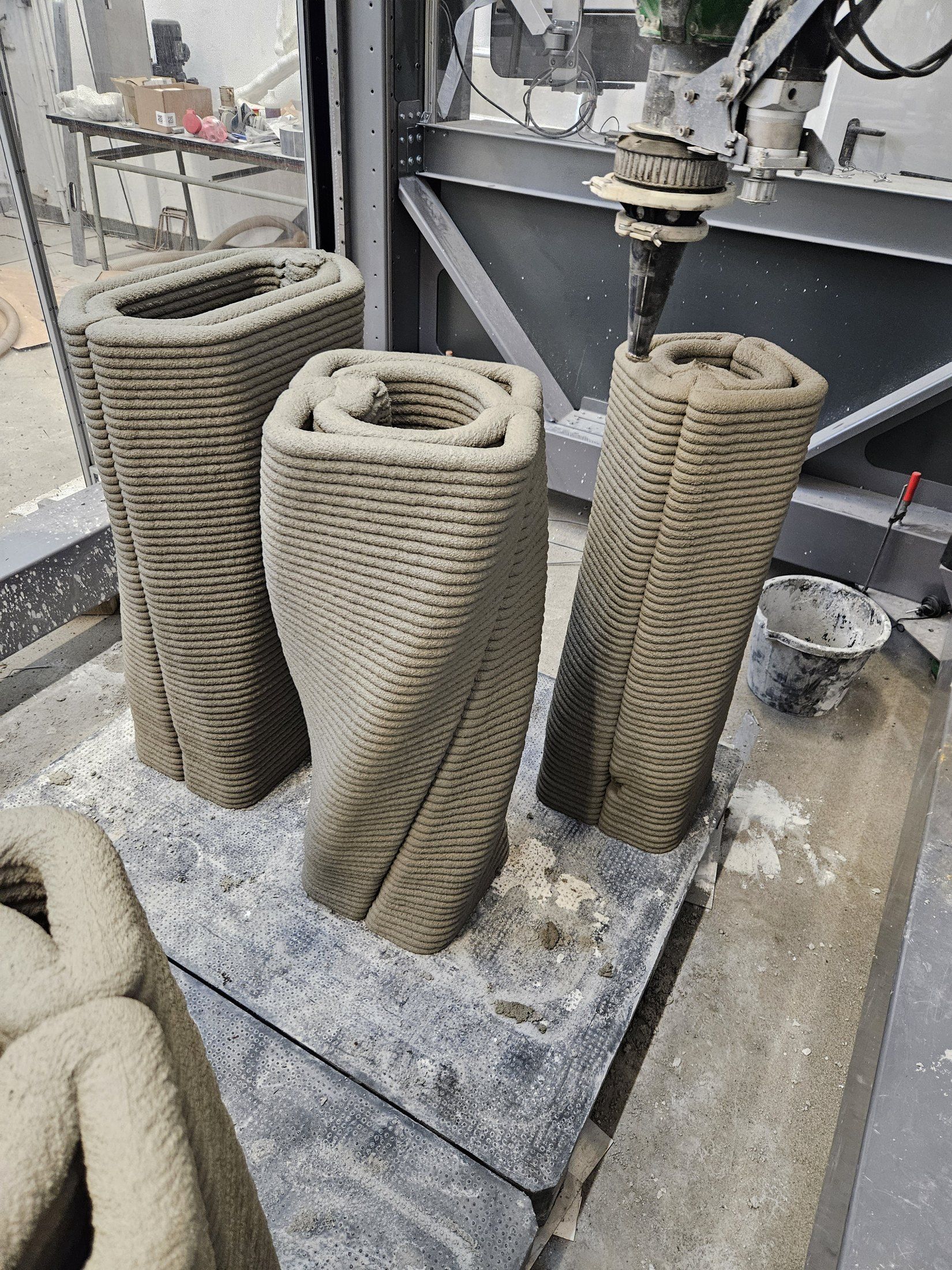
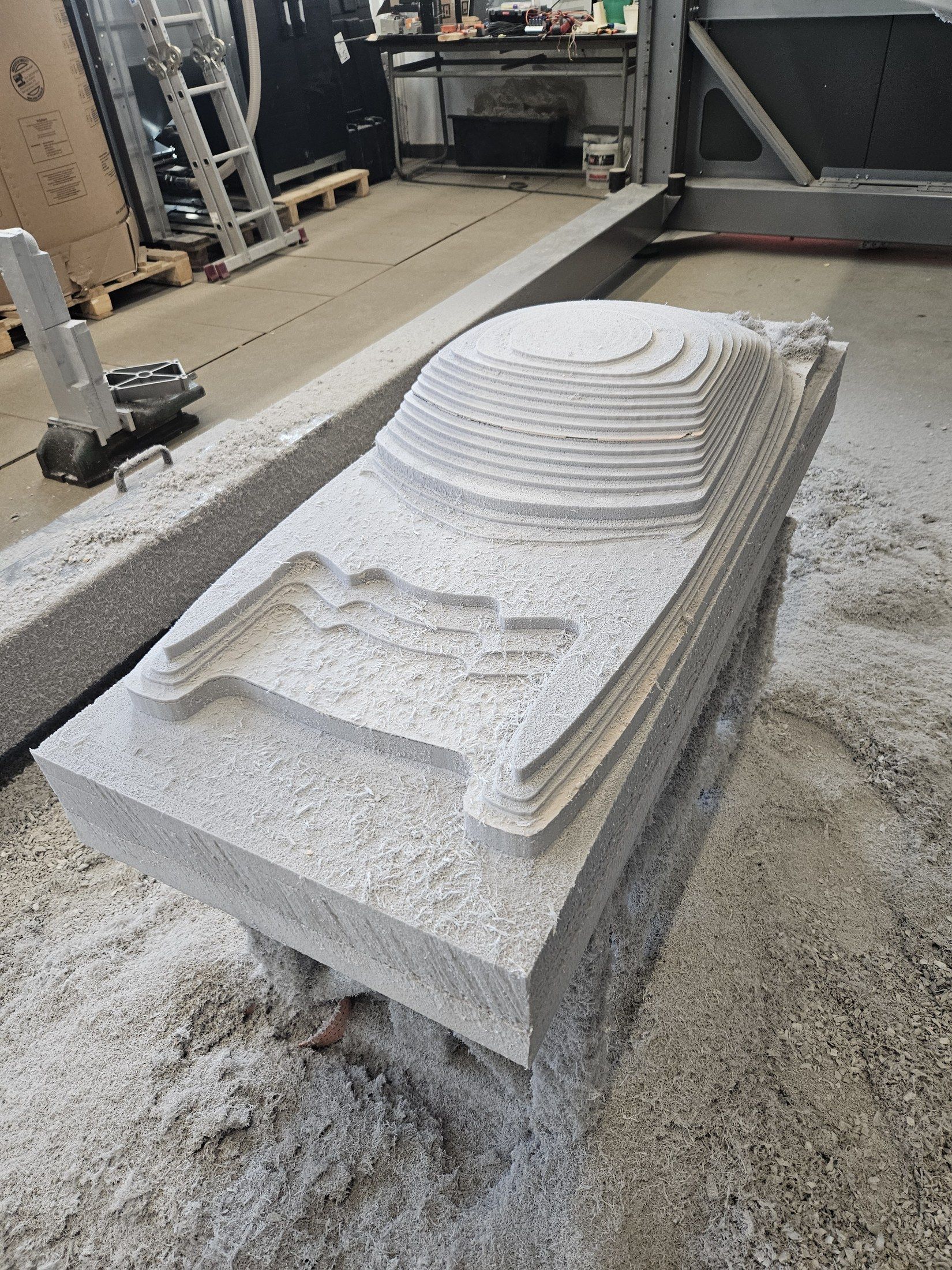
The plastics extruder prints from granulate, layer by layer. Foamed polystyrene produces large, lightweight bodies – above all moulds and models, which we mill on the same machine to final dimensions and surface finish. Solid plastics – PLA, PPGF30, PET‑G and others – produce compact, thin-walled elements with a smooth surface.
- Models
- FPE20 · FPE50
How a print is made
Granulate
Foamed polystyrene or a solid plastic.
Feeding
Pneumatic conveying delivers the granulate to the extruder.
Extruder
Plasticises the granulate and lays a bead with the specified cross-section.
Machining
5‑axis milling to final dimensions.
Materials
Foamed plastics
Modified polystyrene printed at 150 °C. The print has closed cells – it is lightweight, does not absorb water, insulates well and withstands compression well for its weight. We set the density in the range of 100–500 kg/m³; one tonne of granulate yields approx. 6.7 m³ of print (at approx. 150 kg/m³).
Features
- print volume approx. 5 times greater than that of the granulate
- large overhangs can be printed
- no warping or interlayer cracking
- easy to machine, little waste
- after milling: smooth surface and accuracy to any required tolerance
- fully automated production of moulds and models
Applications
- Laminating moulds – working surface milled to size
- Tooling – fixtures and moulds for room-temperature use
- Models and prototypes – fast production of form models and prototypes
- Lightweight structures – large elements with high compressive strength for their weight
- Stage design – lightweight stage set elements and props
- Thermal insulation – elements with low thermal conductivity
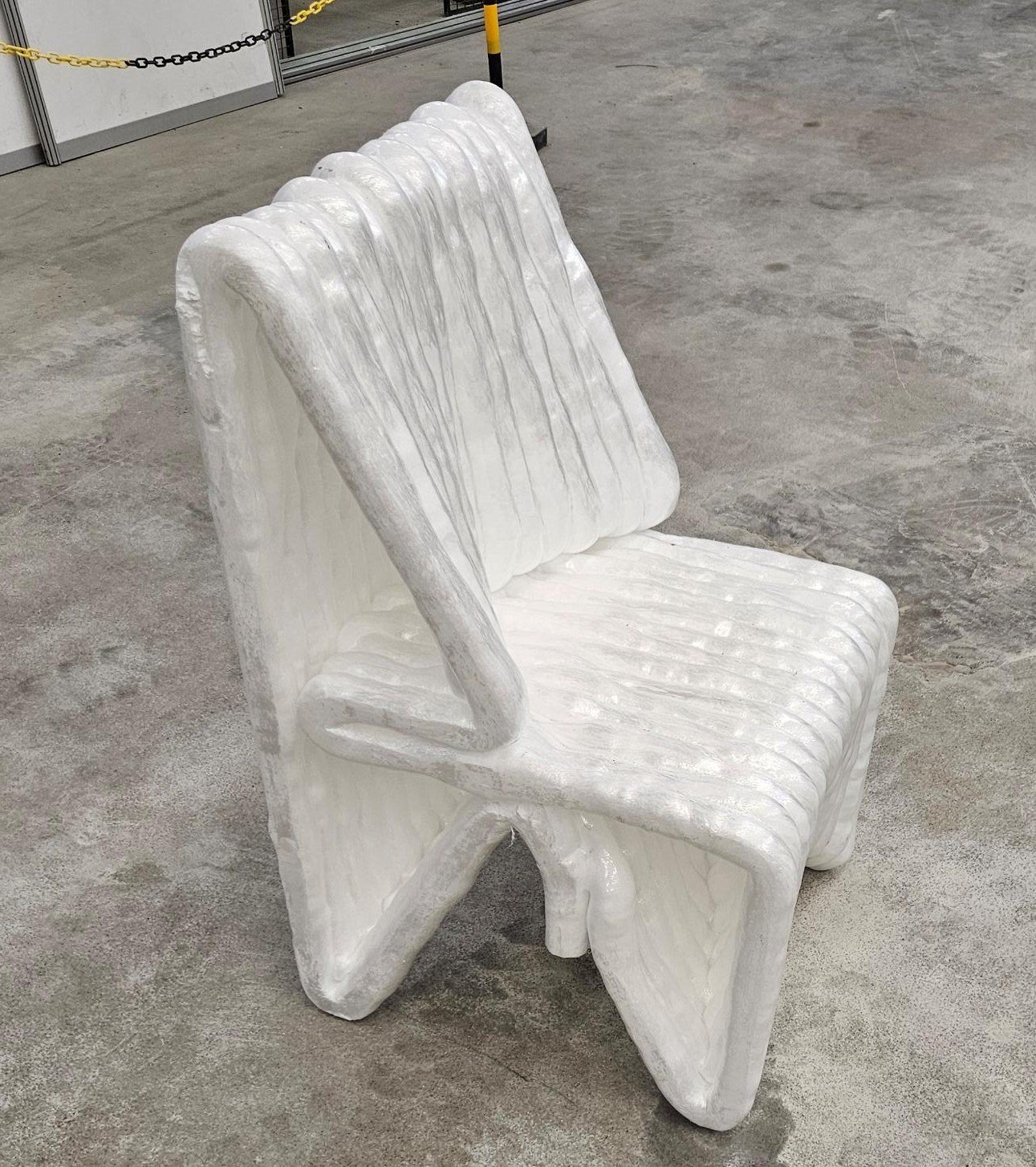
Foamed polystyrene vs. insulation boards
| FPE PrintE | XPS | EPS | |
|---|---|---|---|
| Density | 170 kg/m³ | 33 kg/m³ | 20 kg/m³ |
| Young's modulus in compression | 45 MPa | 10 MPa | 5 MPa |
| Tensile strength | 0.9 MPa | 0.3 MPa | 0.1 MPa |
| Compressive stress at 10% strain | 1.5 MPa | 0.3 MPa | 0.1 MPa |
Print properties depend on the density at which we print (100–500 kg/m³). The values in the table refer to a density of approx. 170 kg/m³.
Solid plasticsIn development
Solid plastics are printed with the same extruder after changing a set of parts.
Features
- PLA, PET‑G and other granulates
- glass-fibre reinforced plastics – PPGF30
- bead width from 5 mm – thin-walled elements
- compact, smooth prints with regular layers
Applications
- composite laminating moulds and tooling
- assembly and positioning fixtures
- furniture and interior fittings
- large decorative elements and lamps
- thin-walled elements with free-form geometry
Printing tool, granulate
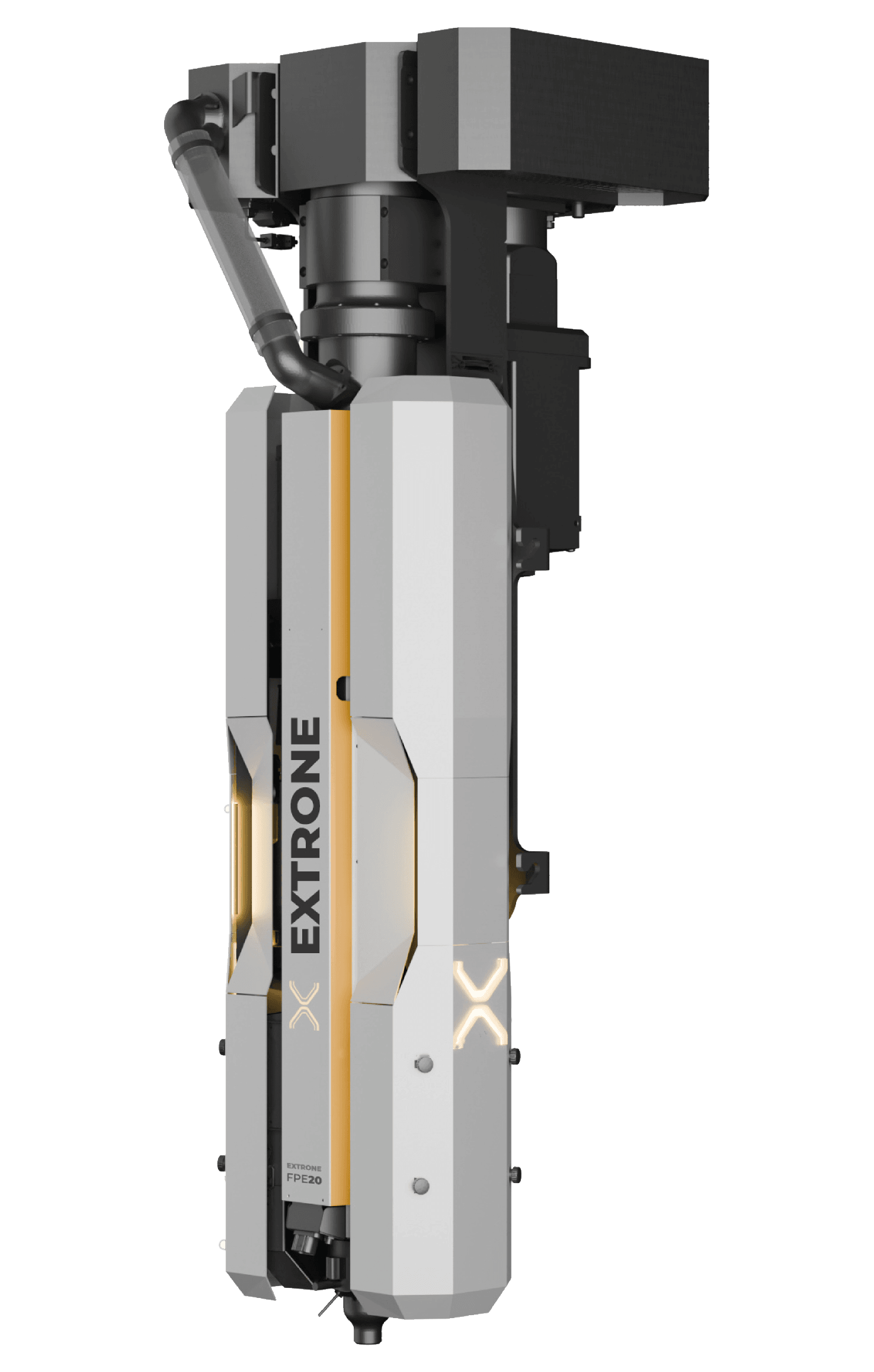
Plastics extruder
The extruder plasticises the granulate in heating zones and lays a bead with the specified cross-section. We offer two models – FPE20 and FPE50.
Tool design
- Granulate feed hose
- Screw servo drive
- Heating zone housing
- Nozzle
Features
- foamed plastics; solid plastics – with an additional set of parts
- pneumatic granulate conveying – as standard
- servo drives for the screw and the granulate feeder
- heating zones and print bead post-heating
- active print cooling
- communication with the machine – Modbus TCP
| FPE20 | In developmentFPE50 | |
|---|---|---|
| Maximum throughput | 20 kg/h | 50 kg/h (estimated) |
| Print density | adjustable, 100–500 kg/m³ | adjustable, 100–500 kg/m³ |
| Heater power | 6.7 kW | 12 kW |
| Print bead post-heating | 6.8 kW | 6.8 kW |
| Main drive | servo drive 4 kW | servo drive 7.5 kW |
| Granulate feeder drive | 400 W | 400 W |
| Communication with the machine | Modbus TCP | Modbus TCP |
We can tailor the extruder parameters to your needs.
Coming soon
- Solid plastics kit – PLA, PPGF30, PET‑G and others
Solutions at the final stage of development and production preparation. Availability, timing and parameters are confirmed individually.
Request a quote
Not sure which technology fits your part? Describe what you want to make; we will suggest the process and material, and print a sample before you decide.