
Home/Technologies/3D concrete printing
Technology
3D concrete printing
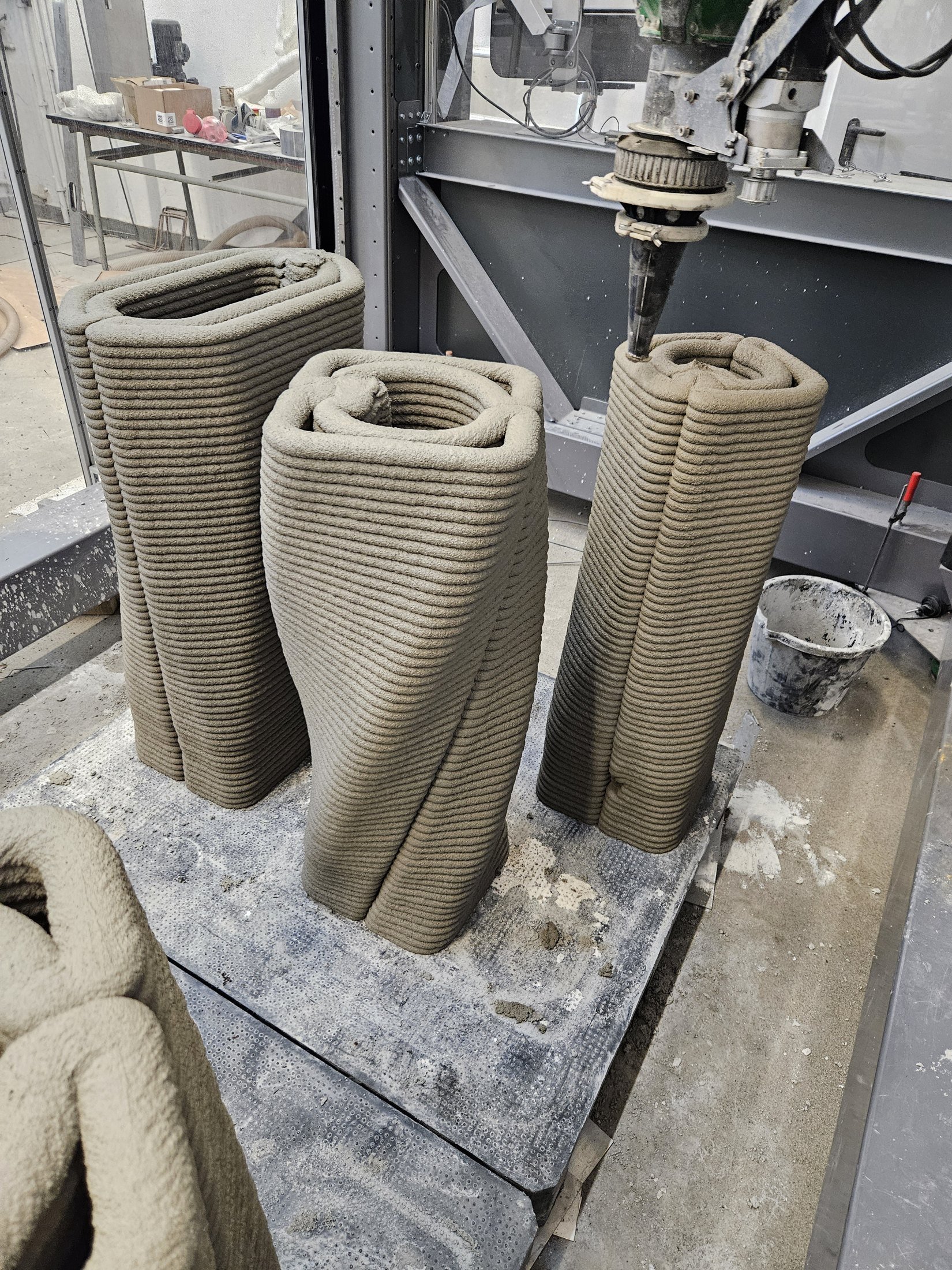
3D concrete printing combines digital design with the reliability of a traditional building material. The machine lays the mix bead by bead, layer upon layer – without formwork, straight from the digital model. The same process is used to build structures at their final location and to precast elements in a hall.
- Models
- CPE35 · CPE50
Key advantages of 3DCP technology
Why 3D concrete printing
3D concrete printing changes the way concrete elements are made: less labour and material, shorter lead times and freedom of form.

Automationup to −75%
By eliminating formwork and reducing labour, large-scale 3D printing can shorten the production of concrete elements by up to 75%.

Reduced labour intensity3 operators
The machine requires only three operators, who perform mainly technical tasks. Less manual labour and less dependence on workforce availability.

Work safety
Greater work safety and less manual work on the construction site and in the plant.

Design freedom
Variable arcs, radii and curved forms are printed with no additional cost for custom moulds – unique architecture is produced at the price of a straight wall.

Mass customisation
Unique series of elements without reconfiguring the production line – all modifications are made solely in the digital file.

Topology optimisationup to −75%
Concrete is placed only where it is structurally needed. This makes fuller use of its properties and reduces material consumption by up to 75%.

Continuous operation24/7
Continuous operation possible, 24/7 – shorter construction and production time.

Lower costs, higher return on investment
Eliminating formwork and the work associated with it, automating the construction site, finishing projects sooner and earning higher margins on uniquely designed elements make the technology highly profitable.
How a print is made
Mix preparation
A mixer or a pump with a continuous mixer, also with a silo – selected to suit your production.
Pumping system
We select the pump from several models; it delivers the mix to the extruder's buffer tank.
Concrete extruder
The extruder lays a bead with the specified cross-section; the flow rate can be changed during printing.
Machine
The machine guides the extruder along the toolpath stored in the program (G‑code).
What can be printed
- Construction
- residential and commercial buildings, precast elements (walls, foundations, stairs), load-bearing structures
- Outdoor furniture and landscaping
- benches, planters, bins, decorative walls, playgrounds with unusual shapes
- Urban space
- bus shelters, urban stairs, safety barriers, gazebos and pergolas
- Industry and art
- tanks and technical housings, sculptures and spatial installations
Mix – typical parameters
- Strength (28 days)
- 15–90 MPa
- Vertical build rate
- up to 0.5 m/h
- Mix working time
- up to 40 min
- Colour
- integral colouring
- Reinforcement
- bars placed during printing
Typical values – depending on the mix used. Choosing the mix allows the parameters to be matched to the application, e.g. to achieve a faster vertical build rate.
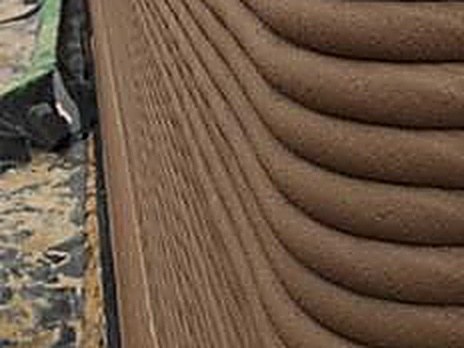
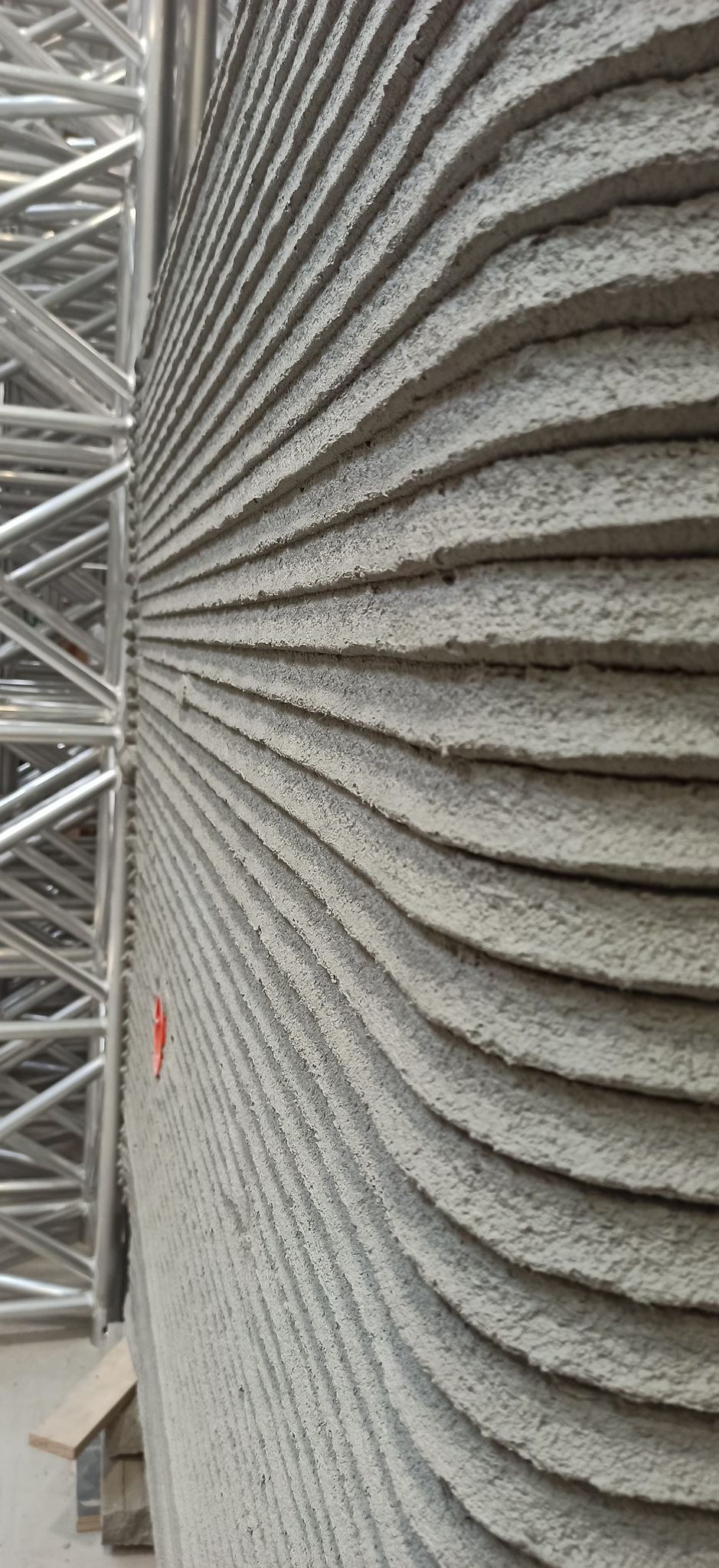
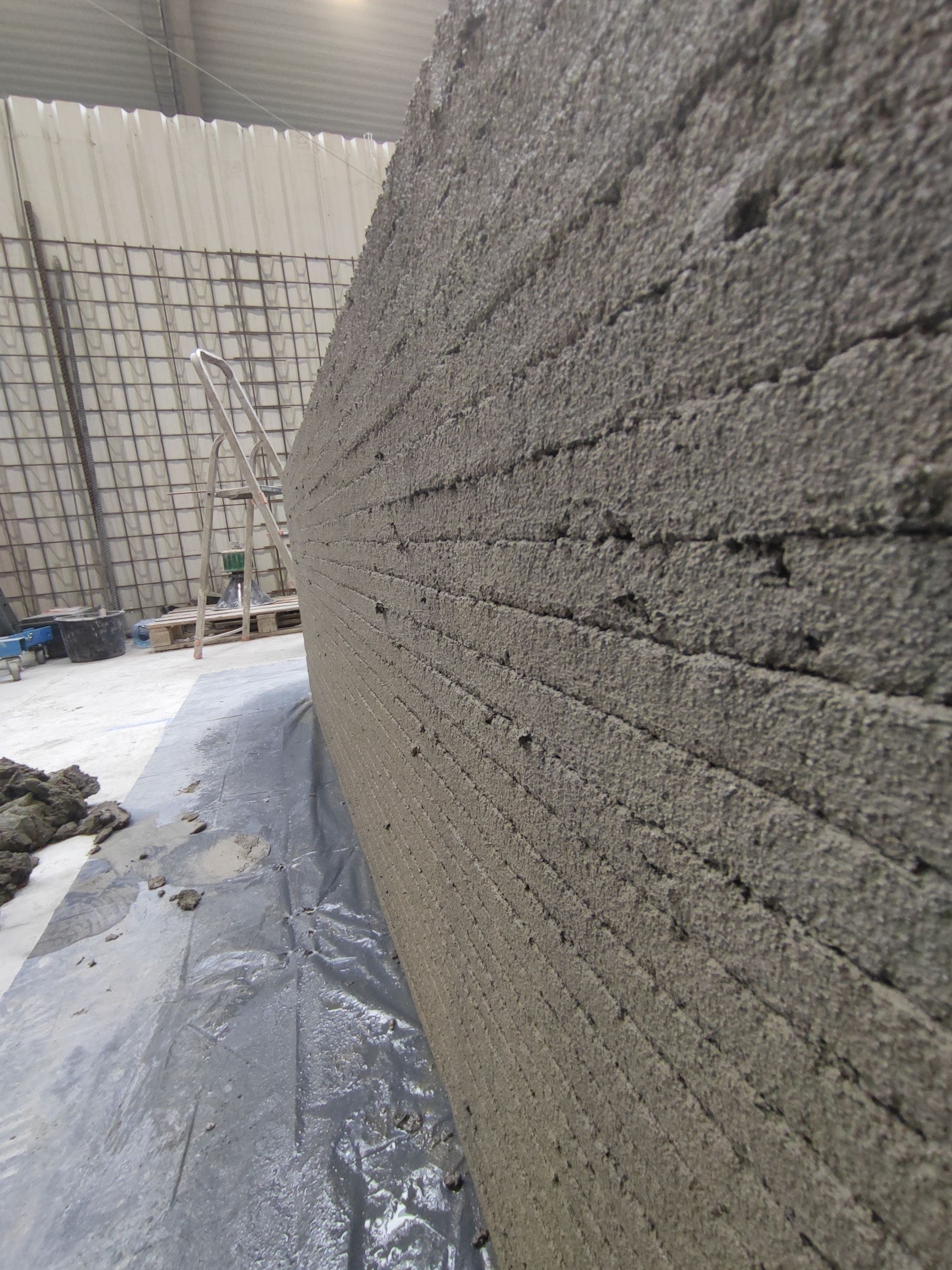
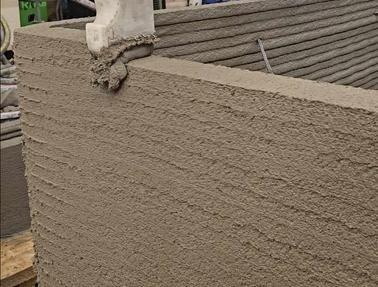
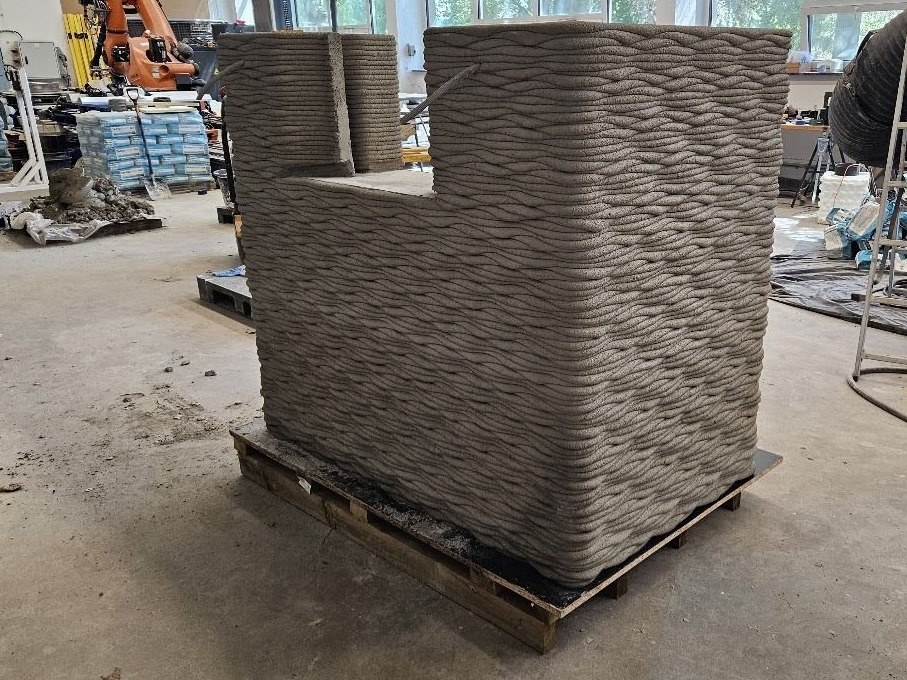
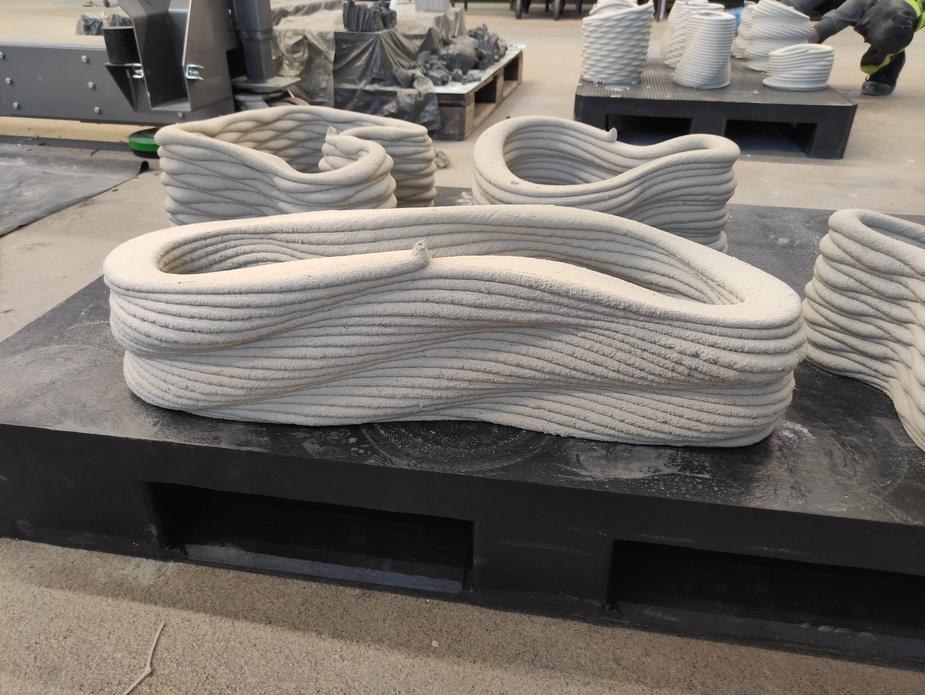
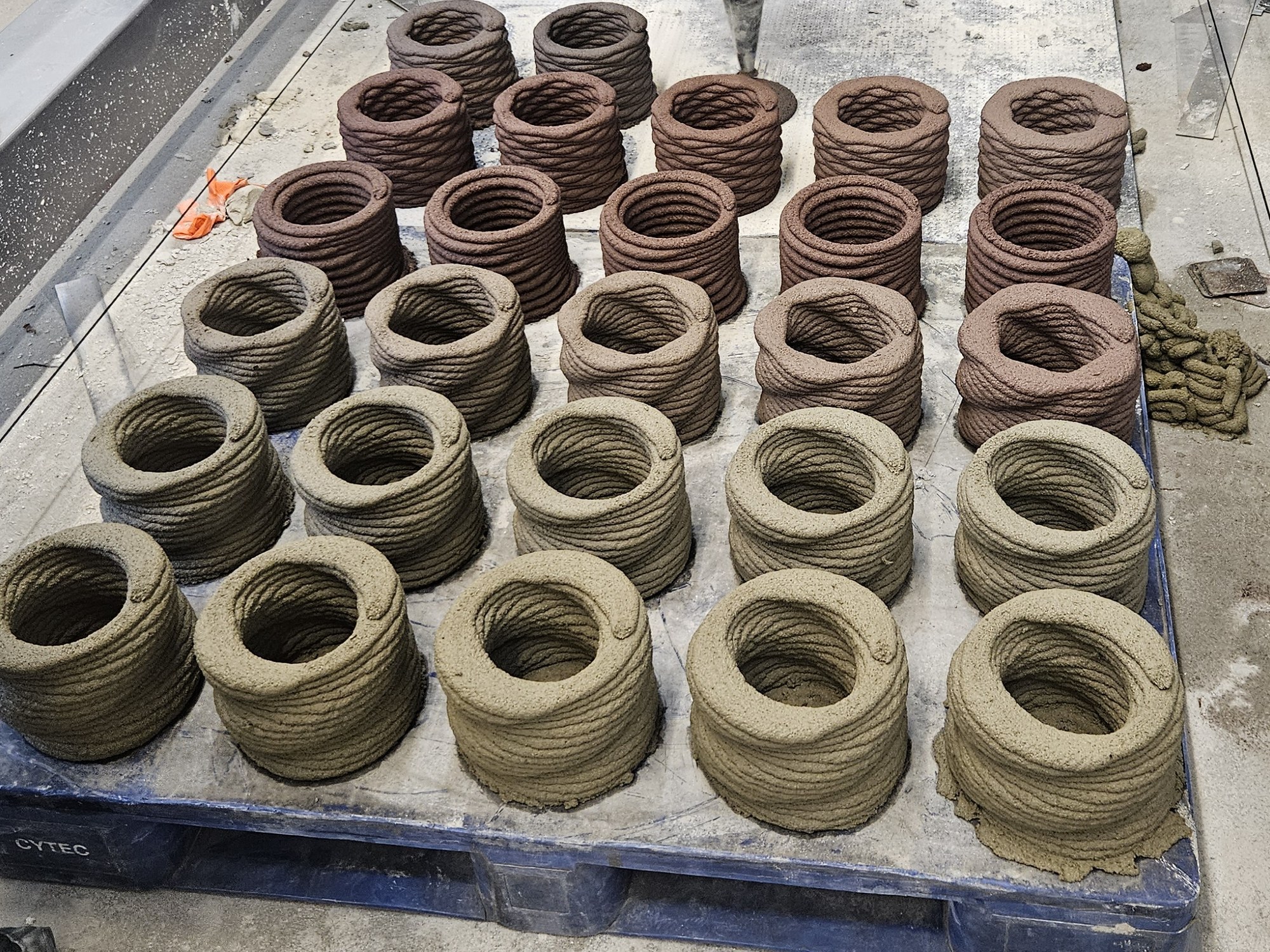
Surface finishes
Bead width
set by the nozzle size (Ø 20–70 mm, bead 25–90 mm); with nozzle rotation – up to 250 mm
Bead height
defined in the program (G‑code) – also variable during printing
Flow rate
changed during printing – varies the bead width and creates a relief
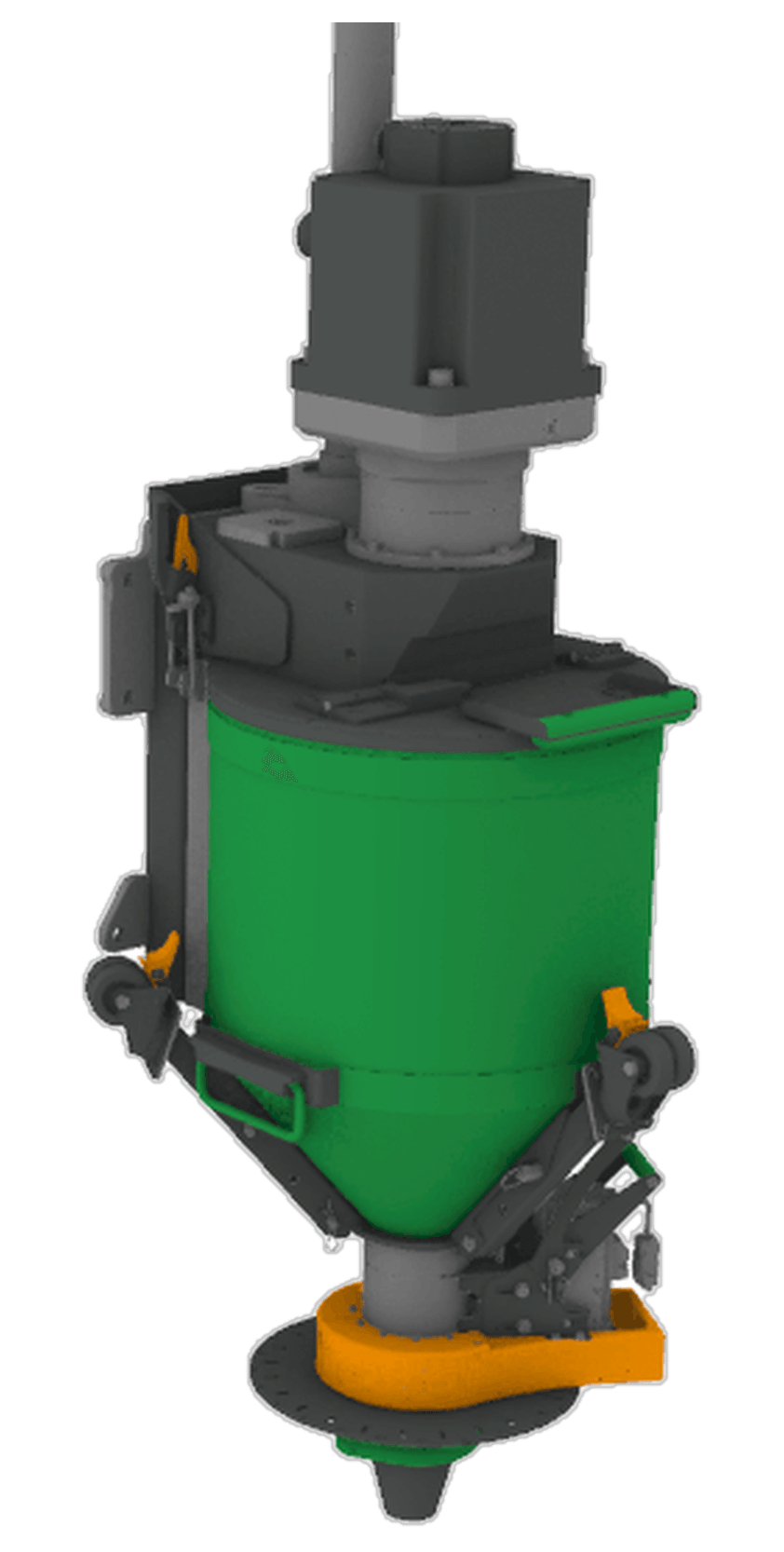
Printing tool
Concrete extruder
The extruder lays the mix bead by bead and gives it the specified cross-section. We offer two series models and a made-to-order version.
Tool design
- Stainless steel buffer tank
- Geared drive
- Mounting plate with quick coupling
- Nozzle rotation system
- Interchangeable nozzle
Features
- stainless steel buffer tank
- surface-hardened parts of the extrusion system
- flow-rate adjustment during printing
- quick nozzle change system – 10 nozzles in the set
- nozzle rotation system – required for non-round nozzles
- concrete level sensor – integration with the pump control
| CPE35 | CPE50 | |
|---|---|---|
| Application | precast elements, street furniture | walls and larger structures |
| Motor power | 3 kW | 5 kW |
| Buffer tank | 35 l | 50 l |
| Max. flow rate | 1.5 m³/h | 3 m³/h |
| Pump connection | DN35 | DN80 |
| Round nozzle diameter | 20–55 mm | 40–70 mm |
| Bead width | 25–70 mm | 50–90 mm |
| Bead width with nozzle rotation | up to 200 mm | up to 250 mm |
| Max. aggregate size | 8 mm | 10 mm |
We can tailor the extruder parameters to your needs.
Nozzles – bead cross-section
Coming soon
- Automatic composite reinforcement of the print
- Bead width measurement
- Pigment dosing into the extruder
- Twin-nozzle version – higher printing output
- Extruder for multi-component materials
Solutions at the final stage of development and production preparation. Availability, timing and parameters are confirmed individually.
Examples in this technology
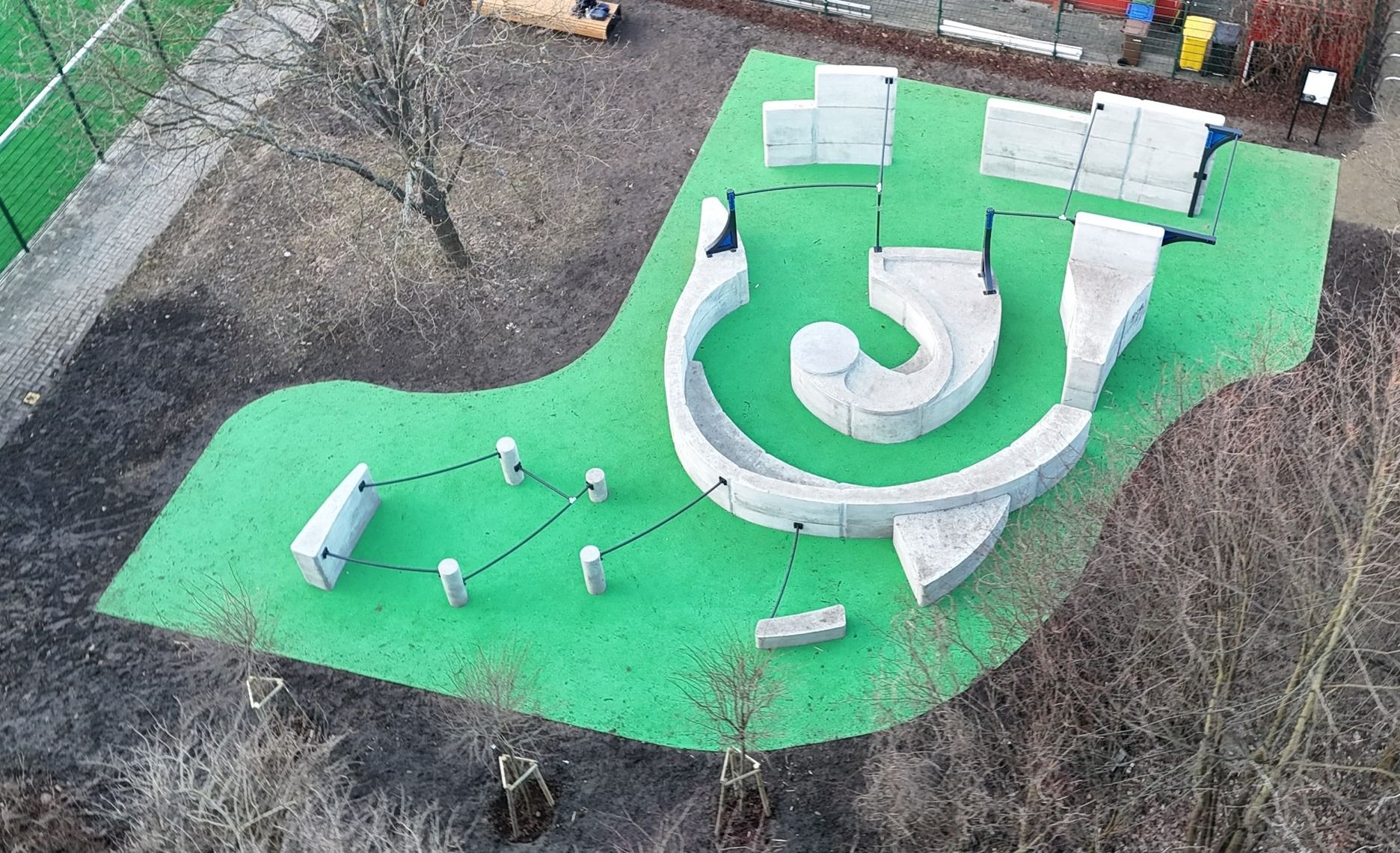
Street furniture · 3D concrete printing
Parkour park
Training elements printed in concrete, assembled on site
- 17-fold reduction in formwork labour
- element production costs reduced by 47%
- element production time reduced threefold
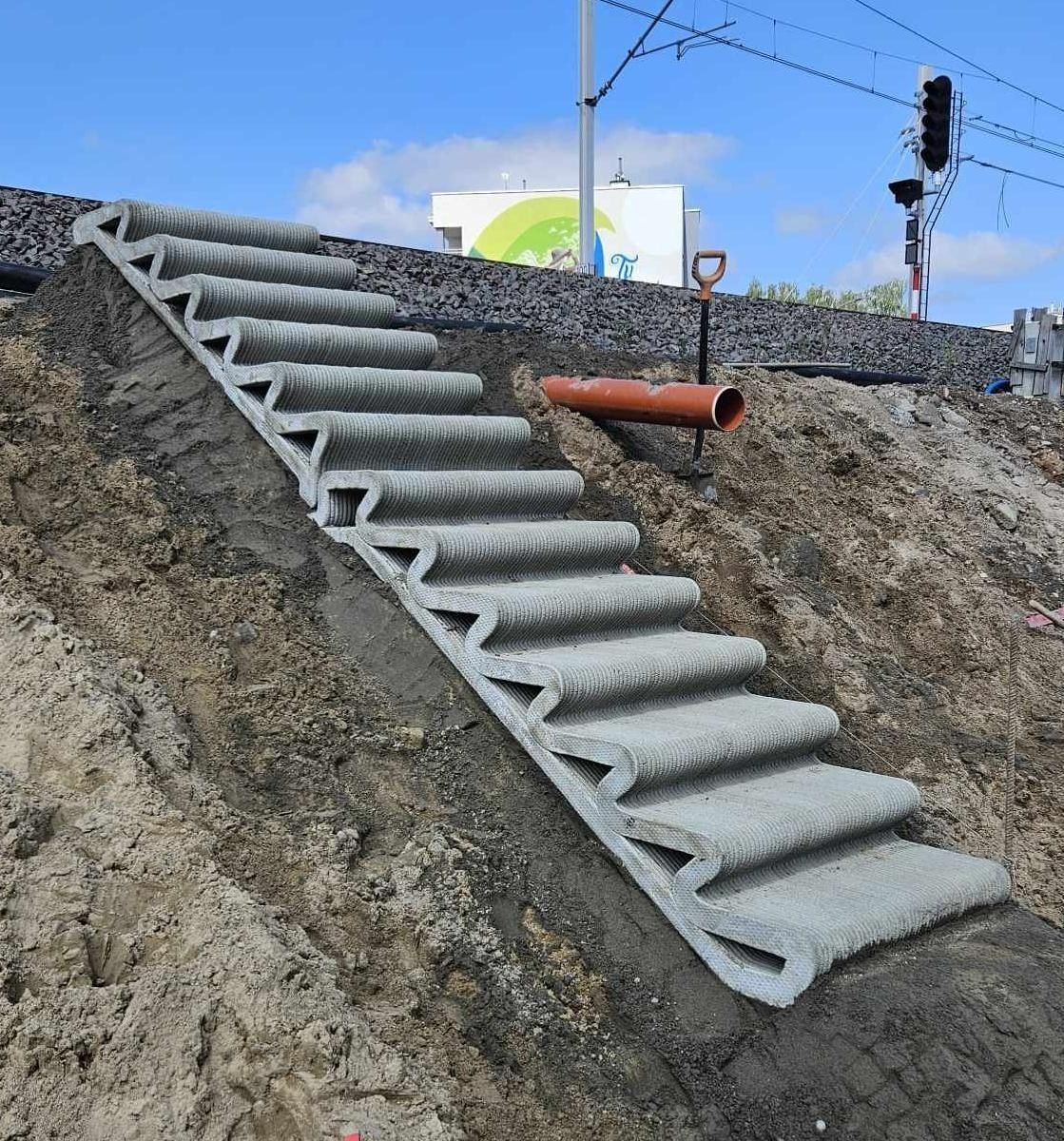
Infrastructure · 3D concrete printing
Slope stairs
One element, no formwork on the slope
- precast elements with free dimensions for each step
- 50% less labour to install each element
- steps cannot shift relative to one another – lower risk of defects
- 24% less material
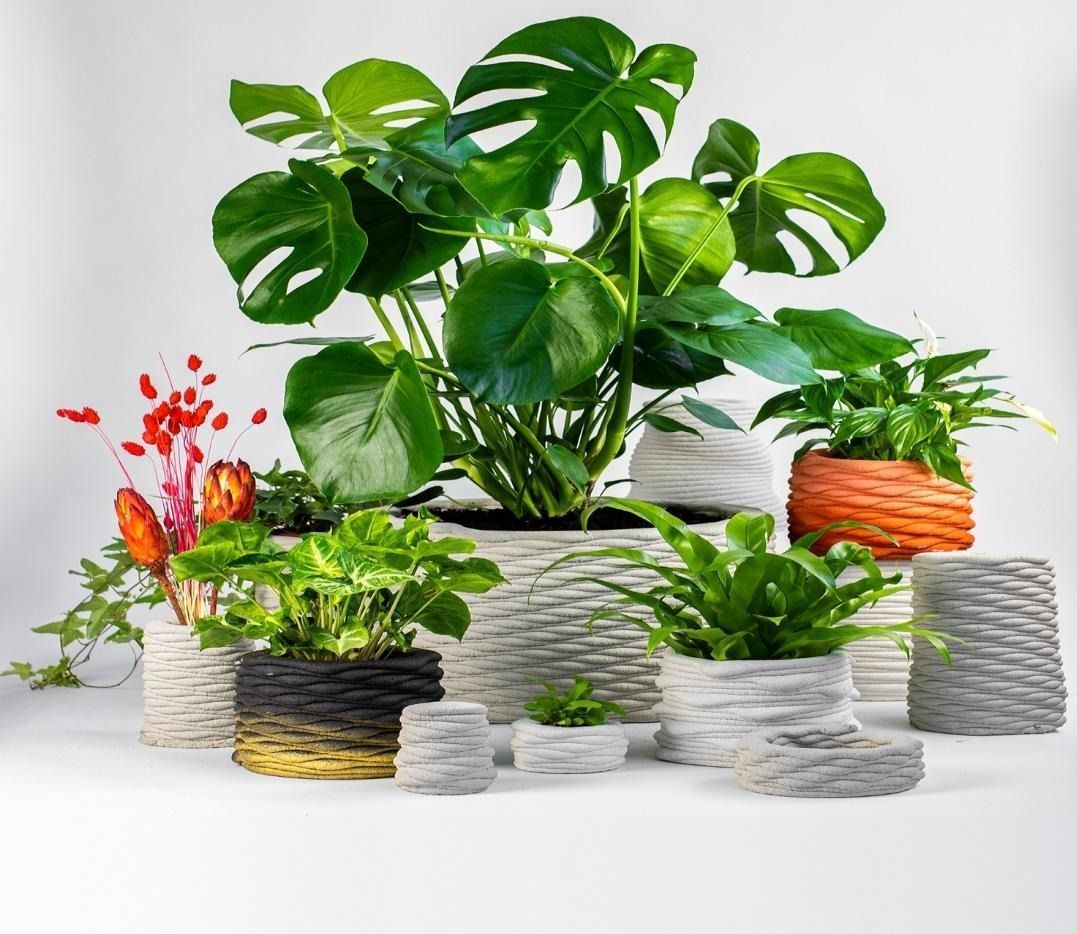
Ready-made products · 3D concrete printing
Flowa planters
3D-printed concrete planters – ready-made designs from the Flowa brand.
See them at flowa.pl ↗Other technologies
From model to print →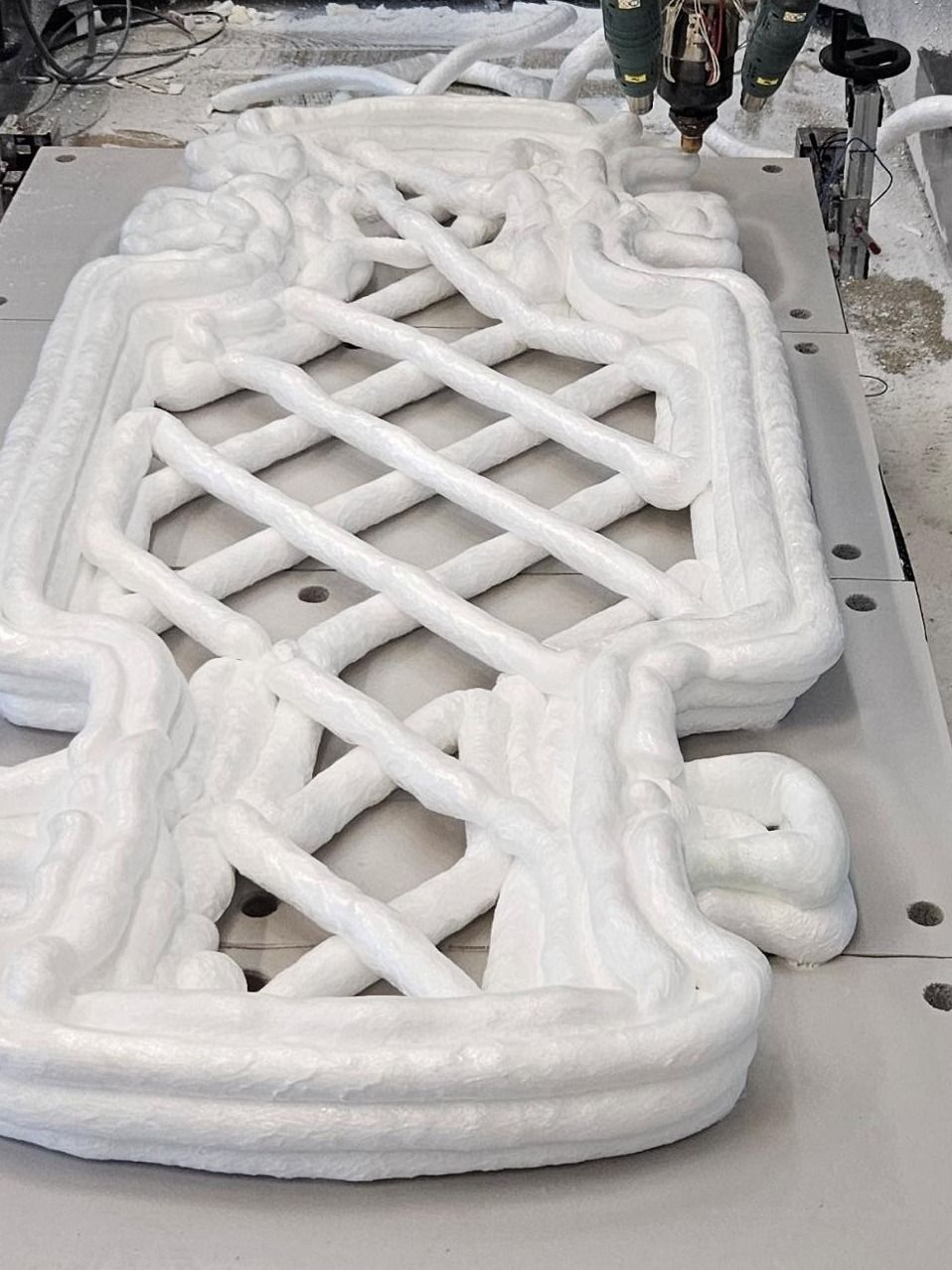
Request a quote
Not sure which technology fits your part? Describe what you want to make; we will suggest the process and material, and print a sample before you decide.