
Street furniture
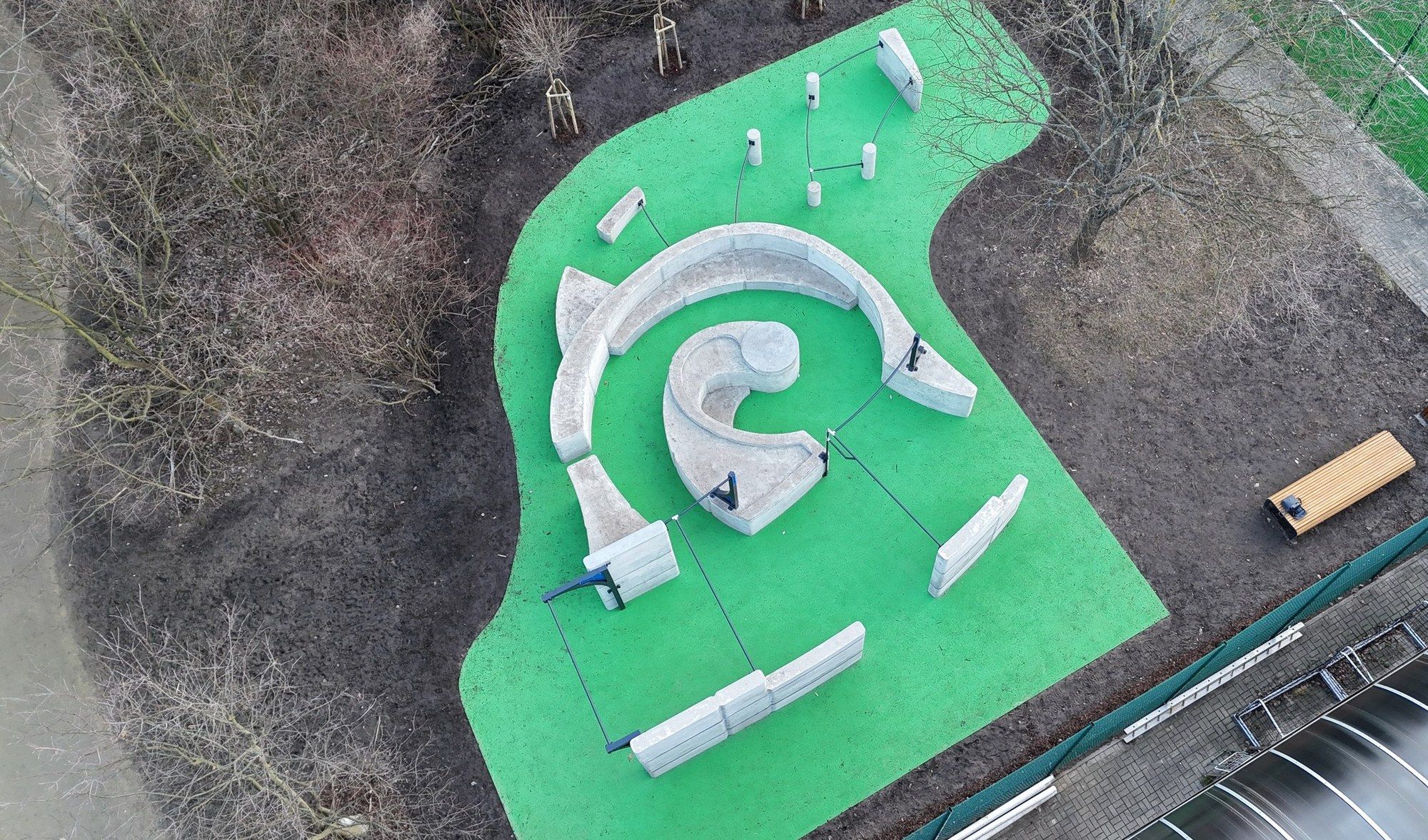
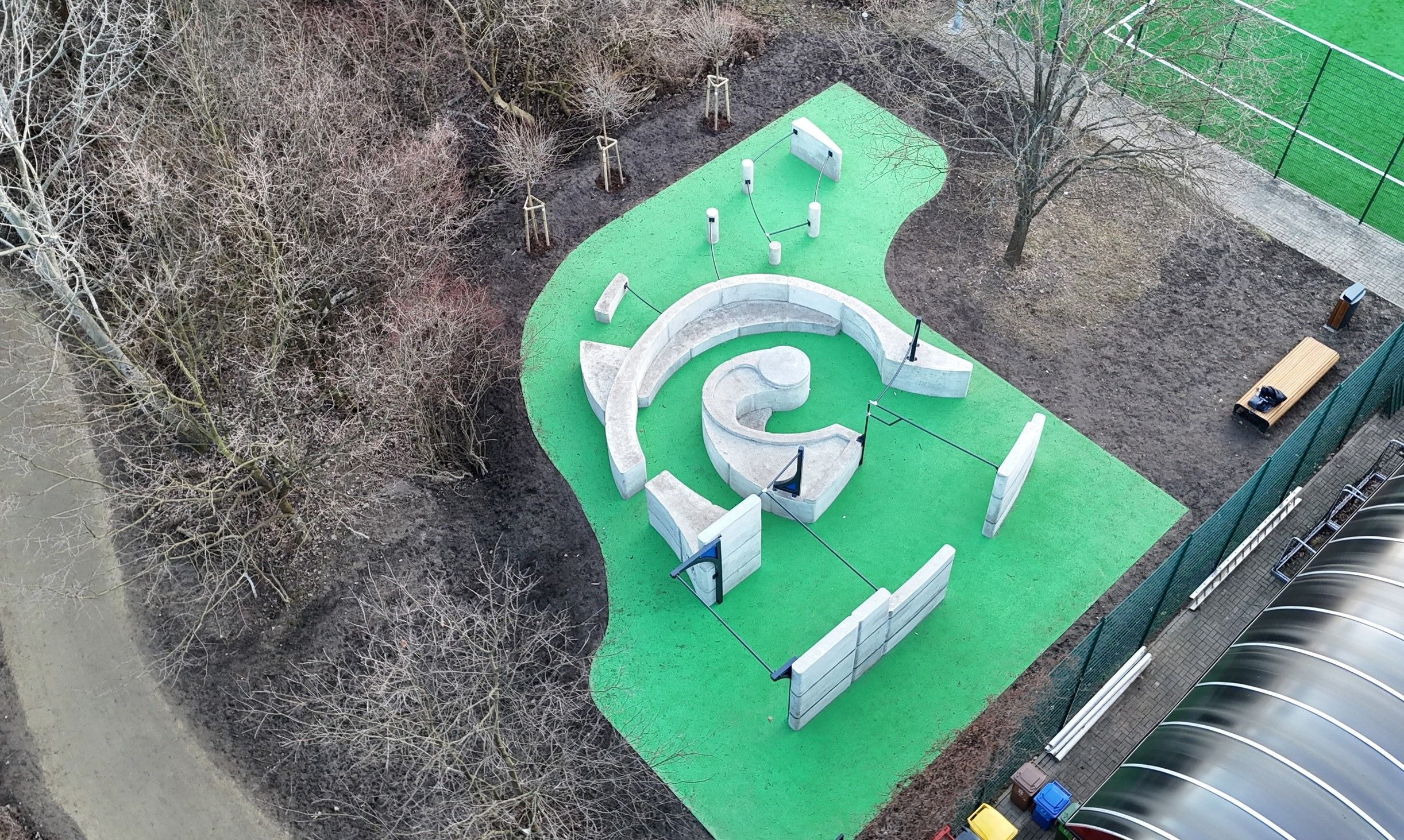
Parkour park
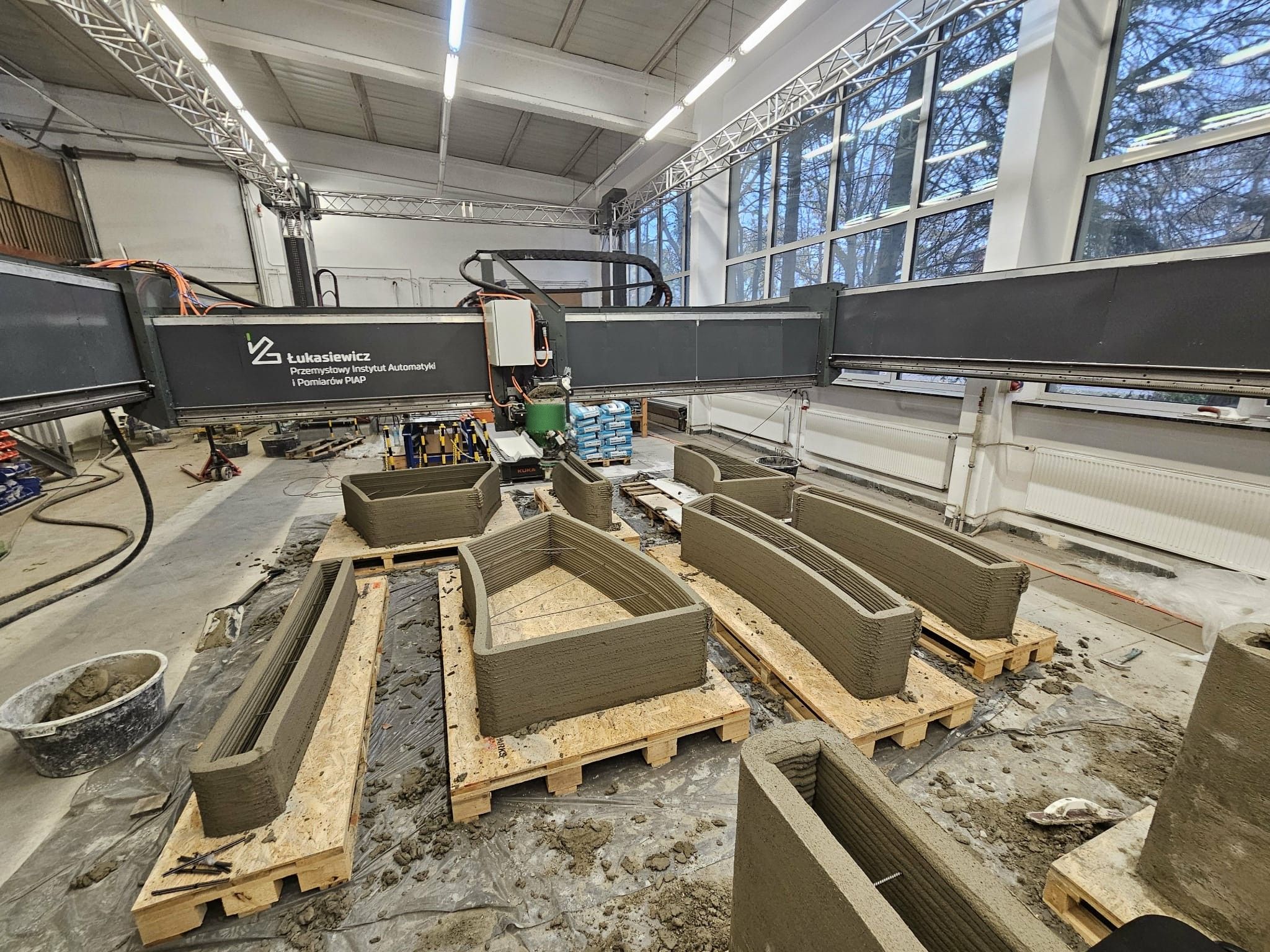
Training elements printed in concrete, assembled on site
In numbers
- 17-fold reduction in formwork labour
- element production costs reduced by 47%
- element production time reduced threefold
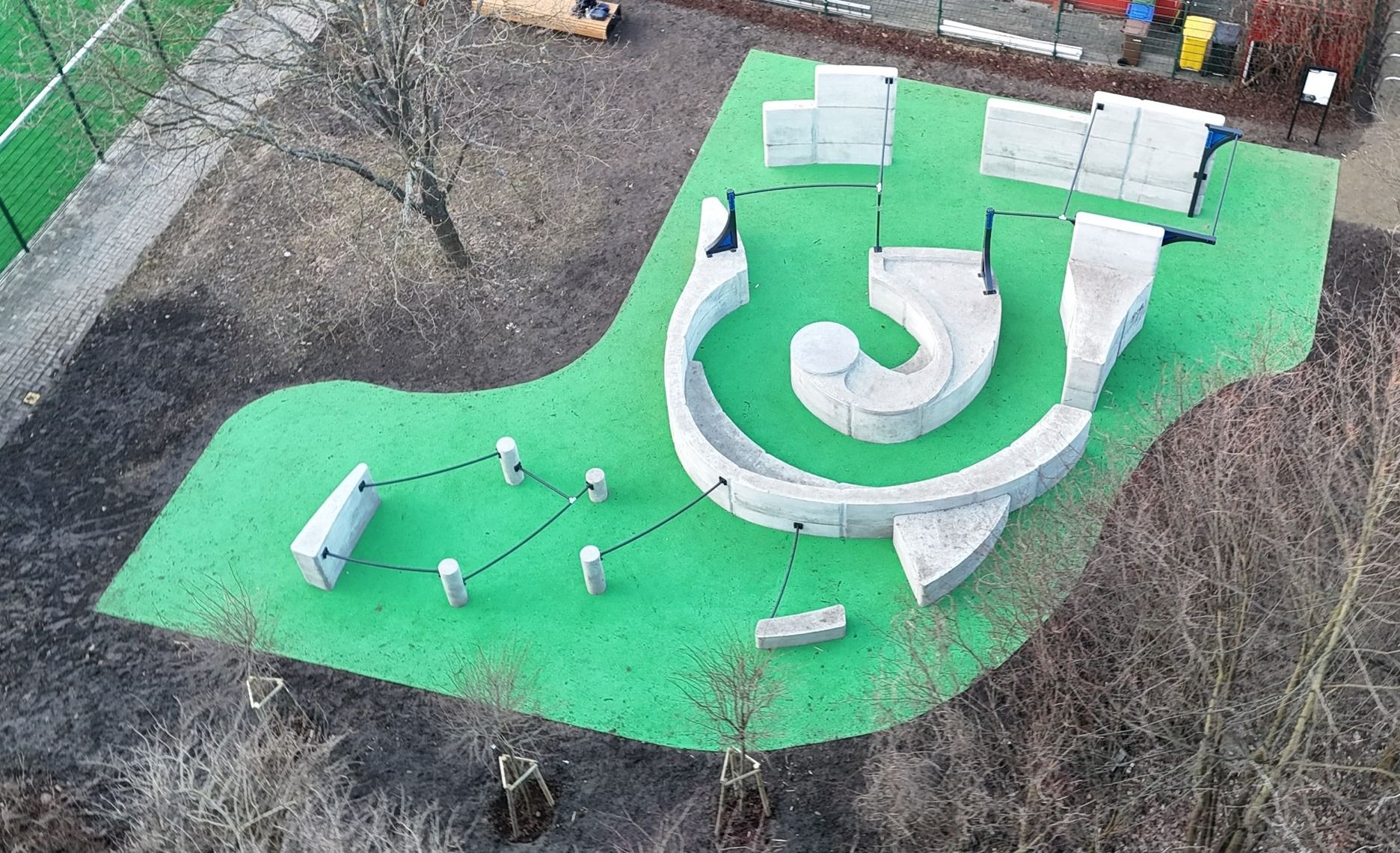
The training blocks are rounded, unusual and each one different. In traditional technology each would mean a separate mould, used once. This is exactly the case where 3D printing stops being a curiosity and becomes an economic calculation.
01 — Challenge
Every block different, every mould single-use
Parkour obstacles need varied shapes and heights – that is the whole point. With cast concrete this means a set of individual formworks that go to waste after a single use.
02 — Solution
An unusual shape costs the same as a simple one
In 3D printing the cost does not depend on how complex the shape is, only on its volume and machine time. The designer no longer backs away from their own idea, because every curve is no longer paid for separately.
03 — Result
An object you cannot buy from a catalogue
The result is a set of elements with forms unavailable in any precast catalogue.
Designing a public space?
If the shape in your head does not exist in a precast catalogue – this is a conversation for us.